
Bilingual, somatic-based therapy in Burlington, Vermont
Centered on supporting Latinos, BIPOC, LGBTQIA+ identities, and our allies
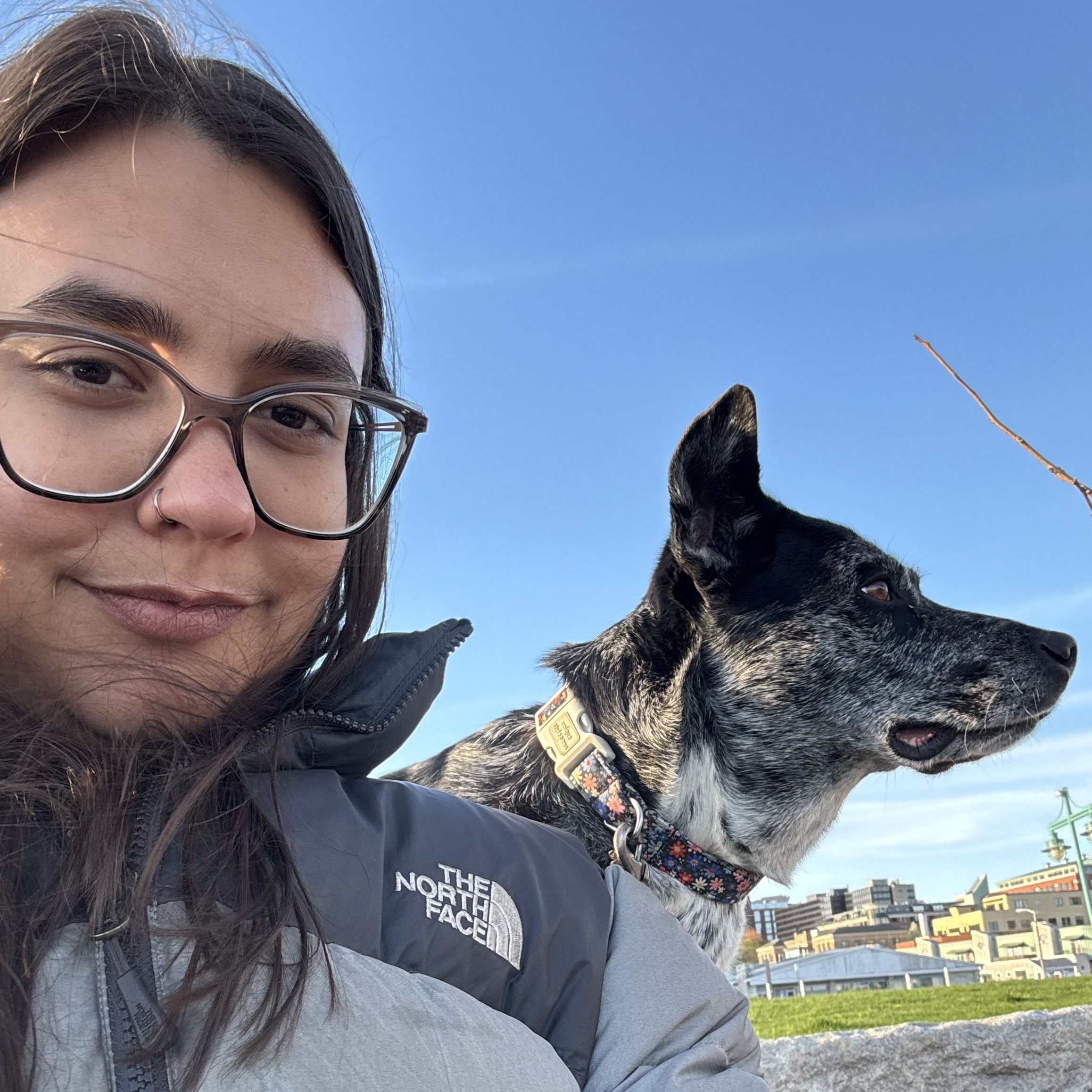
Vermont Rostered Prelicensed Psychotherapist
Master of Science in Clinical Mental Health Counseling
Certificate in Somatic Embodiment and Regulation Strategies
Hi there, I’m Giselle Palacios!
My pronouns are she/her & they/them
I’m a queer Cuban and Colombian femme from Miami, FL – transplanted in Vermont with a mission to provide mental health care that centers the people living in the margins.
Our identities and values don’t just inform who we are, but also how we move through society and our everyday lives. As a therapist, I can’t help but see the larger sociopolitical forces weighing on the hardships my clients carry. It’s this perspective that quietly informs my work to validate and guide clients towards resiliency, relief, and connection.
Ways we can work together

Individual Therapy
One-on-one 50-minute therapy sessions for adults located in Vermont

In-Person Therapy
Visit the calming, light-filled office located in the heart of downtown Burlington, VT

Virtual Therapy
Attend therapy online from anywhere in VT using a secure & confidential Telehealth platform

Embodied Rest Practice
A guided, community practice blending gentle movement, mindfulness, and nervous system education
Curious about my approach?
My approach to therapy is deeply relational. Like any other relationship, it takes time to build trust and vulnerability– turns out it doesn’t actually make us feel safer when we disclose our intimate life to a stranger we just met.
Relationship-building is a series of small risk-taking (I’m going to share something personal) and gathering new evidence (hey, that actually went well). We can’t rush this process! We can only move as quickly as the pace of safety is felt in the body.
I see the work we do together as being a collaborative, embodied, and spontaneous process. As we’re getting started, I’m mindful of inviting us both to take time to reflect on how each step landed before taking the next. I feel like this really helps to slow down the initial pace so we are sure about moving forward before making any commitments.
I invite my clients to connect with the cues of their bodies throughout our session, which often sounds like “what do you notice come up in your body when you talk about this?”
This approach varies for each client, as every person arrives with their own story and sense of safety within their body. We move slowly to assess what we might be able to learn (and tend to) when we can tune into the feelings & sensations that show up.
Through the lens of polyvagal theory, I guide my clients to understanding how their nervous system works in service of their protection and survival. This psychoeducation provides SO MUCH context to how and why we experience anxiety, depression, overwhelm, burnout, and all those other symptoms of distress.
Having this insight is key to interrupting the fear/shame cycle that comes with these very normal and necessary experiences, so we can tap into our self-compassion and inner resilience in those hard moments.
I know firsthand how challenging it can be to find a therapist who shares your identity. I’m proud to be a queer Latine therapist offering a space where the many layers of my clients can feel fully welcomed and witnessed.
In honoring all the depth and meaning of our cultural/racial/gender identity expression, I prioritize centering my client’s context as key to understanding who they are and how broader socio-political factors shape their lived experience.
I invite my clients to take an active role in defining and guiding their therapeutic goals. I truly believe YOU are the expert of your own life, and I see my role as co-conspirator in helping you create the changes you want to see.
Having a non-pathological stance means I view symptoms, behaviors, and diagnosis as a way to categorize the totally reasonable reactions that our bodies take when we are afraid, distressed, in danger, or disconnected. These are protective strategies, and the way our body is designed for our survival. That doesn’t mean these labels can’t be affirming, validating, or empowering, and I honor how each client might feel about and want to name their experience.
Why I use somatics as a therapeutic tool
We experience all of life through the cues and information that show up in our bodies. By learning to notice, be curious about, and tend to this information, we can access deeper wells of healing and live a more connected and nourishing life.
Maybe this resonates for you…
- You’re always in “go” mode, needing to stay busy, productive, or distracted.
- You’re constantly worried, overthinking, and in your head trying to “fix” everything.
- You’re highly sensitive, overstimulated, and endlessly giving to others.
- You feel guilty about prioritizing your needs and setting boundaries in your relationships.
- You are shut down, irritable, and disconnected from yourself and others.

This is how your body learned to protect you.
As uncomfortable as these sensations, symptoms, and patterns are, they are also likely how your nervous system knows to survive. You don’t have to “push through” just to feel better.
You can learn to notice and slow down these reactions, so you can better understand what’s happening in your body and connect your way back to a sense of safety and care.
Curious about working together?
Learn more about what I offer
Come to therapy in person at the downtown Burlington office space.
By appointment only
148 College Street
Burlington, VT 05401
I want to hear from you!
Interested in therapy? Reach out via my confidential contact form.
Want to connect for other reasons? Email me directly at gpalacios.counseling@gmail.com